

The challenge
A website that had outgrown its structure
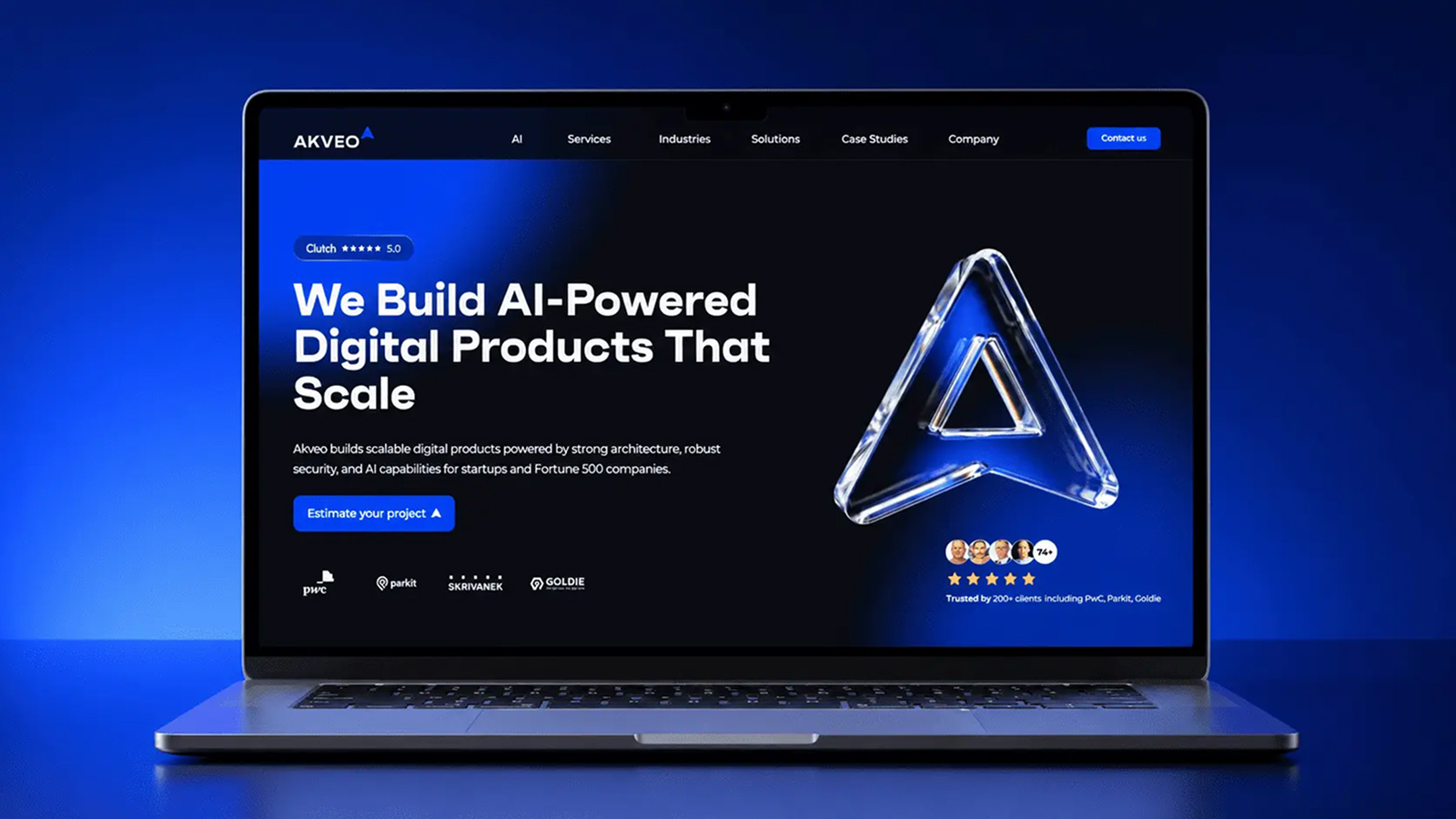
After 10 years of continuous development, Akveo’s website had accumulated hundreds of pages created by different teams at different times.
Publishing was heavily manual. Creating a new landing page meant assembling sections, adjusting layouts and styles, and entering content manually. A single page could take 1–1.5 hours to publish, while maintaining consistency across the growing website was becoming increasingly difficult.
The redesign wasn't simply about making the website look better.
We needed to rebuild the system behind it.
Building the foundation
From individual pages to a scalable CMS
One of my main responsibilities was translating the new website into a scalable Webflow architecture.
Instead of continuing to build landing pages individually, we moved the majority of the website to six standardized CMS-driven templates.
I built and configured the Webflow CMS structure behind them, including the relationships between collections and the logic required to support different types of content within a consistent page system.
This allowed us to separate content from presentation: marketing could manage structured content while Webflow handled how it was rendered.
The result was a website that could grow without creating another unique page structure every time the company launched a new service, industry page, article, or campaign.
AI-powered publishing
What if marketing didn't need to open Webflow at all?
Even with a better CMS architecture, publishing still meant navigating multiple collections and manually filling dozens of fields.
I wanted to remove that step.
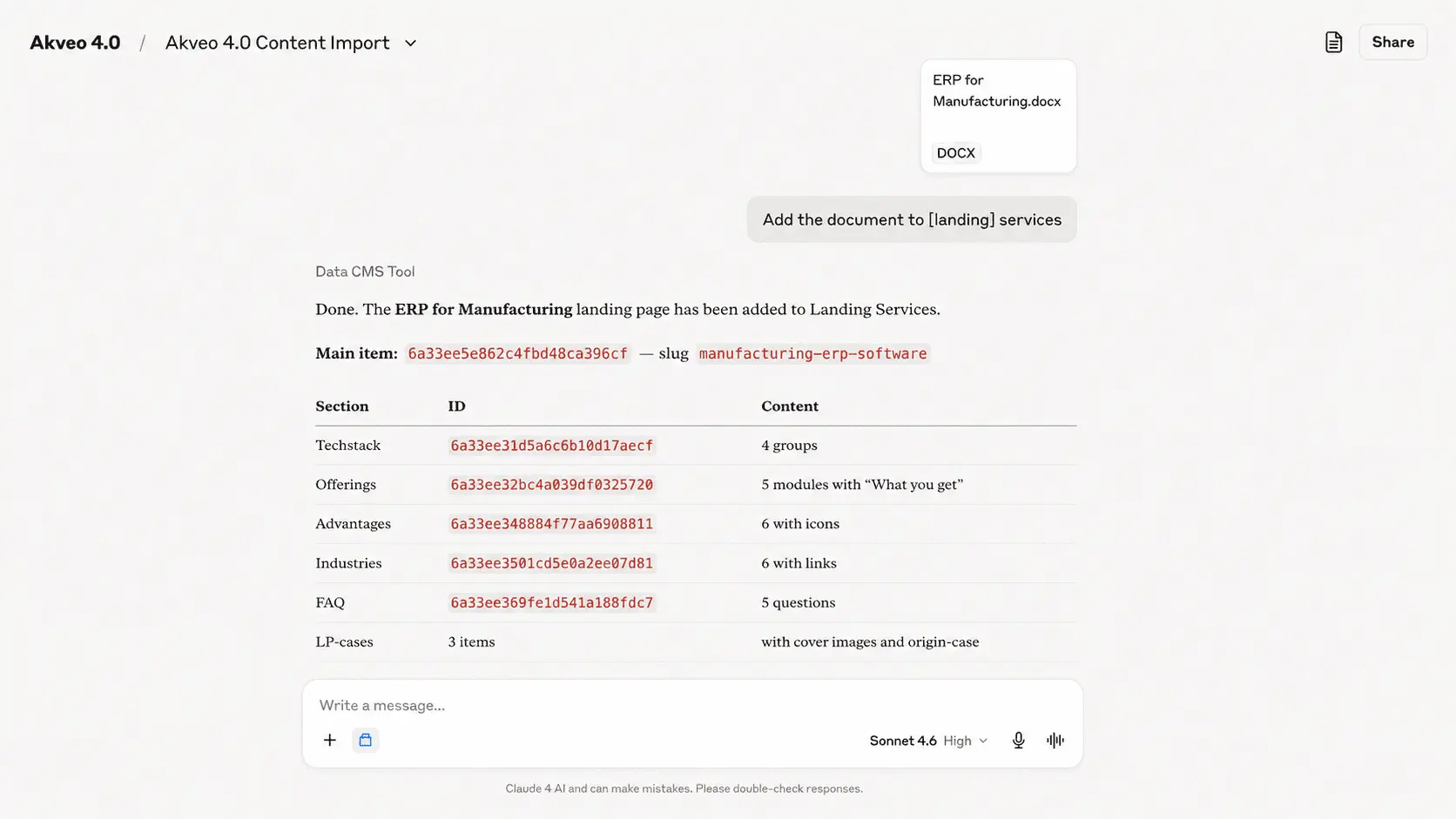
I configured an AI-assisted publishing workflow connecting Claude with Webflow through MCP. Content managers could provide Claude with a prepared document and instruct it to create the page.
Claude analyzes the content, identifies the appropriate CMS collection, maps information to the required fields, formats the content, and creates the corresponding Webflow item.
What previously required more than an hour of manual work could now be completed in minutes.
The new workflow made content publishing up to 30× faster while reducing repetitive work and the opportunity for human error.
Designing for experimentation
Building a website that could change its mind
A marketing website shouldn't be treated as a finished artifact.
Alongside development, I worked on parts of the website design and helped establish a workflow for testing ideas rather than relying entirely on assumptions.
One example was the homepage hero.
I created alternative hero variants and set up A/B experiments to compare different messaging, layouts, and conversion approaches with real traffic.
Instead of debating which version looked better, we could observe how users actually responded and use that data to inform the next iteration.
This turned the homepage from a static design deliverable into something we could continuously measure and improve.
Development beyond the build
Design, development and growth in the same workflow
My role wasn't limited to translating Figma layouts into Webflow.
I worked across the boundaries between design, development, content operations, and growth — contributing to UI decisions, building the CMS architecture, creating automation for the marketing team, and implementing experiments after launch.
That combination became especially valuable on a website of this scale: design decisions had to work not only visually, but as reusable systems that other people could operate every day.
.png)
The outcome
Less manual work. More room to grow.
The redesign transformed Akveo’s website from a collection of individually maintained pages into a scalable marketing platform. Content managers gained a much faster publishing workflow, landing pages became structurally consistent, experimentation became part of the website process, and the CMS provided a foundation that could continue growing with the company.
Visit Live Site